← BACK TO JOURNAL

On the Sands of Normandy

On the Sands of Normandy
"Please no more war": a mural I came across in the town of Arromanches.
In this entry
  1. A Place Left Forever in History
  2. Countless Places to Remember D-Day
  3. Other Postcards from D-Day

Rarely has the fate of Europe hung by such a thin thread as on that day when, at H-Hour, 132,000 Allied soldiers landed on the beaches of Normandy. D-Day, or perhaps as the celebrated historian Cornelius Ryan christened it, "The Longest Day of the Century."

By the evening of that day, 10,000 of those young soldiers had died, staining the sea red with their blood. Today we can see their graves in the meticulously kept military cemeteries.

Despite the decades that have passed, in every single town in the Normandy region, the memory of the war and its consequences remains present, reflected in the numerous memorials, museums and cemeteries that can be visited. Even so, I chose as the cover image for this post a photo of a mural I came across while walking through the town of Arromanches. In it, the artist confronts us with a desperate, innocent and futile call for peace. Especially at a time when Europe once again feels war at its doorstep.
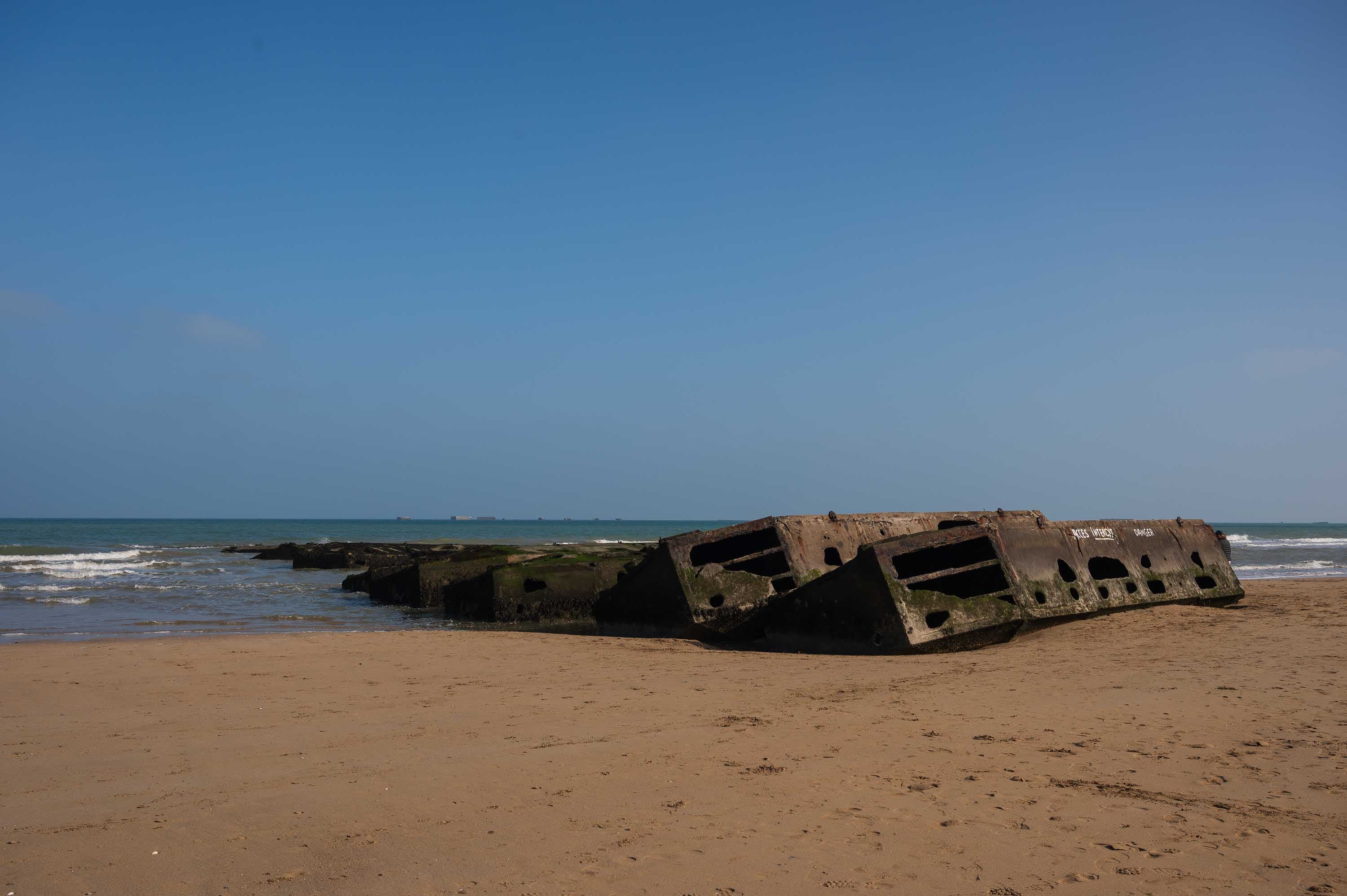
The remains of the Phoenix caissons from the Mulberry artificial harbor, on the beach at Arromanches.

A Place Left Forever in History

The beaches that Steven Spielberg immortalized in the incredible opening scene of Saving Private Ryan look empty and peaceful today, save for the remains of the countless casemates and bunkers that once turned them into a true fortress. And yet, the feeling is that, far from empty, they are full of ghosts and memories of those young men who gave their lives to free Europe from Nazi tyranny.
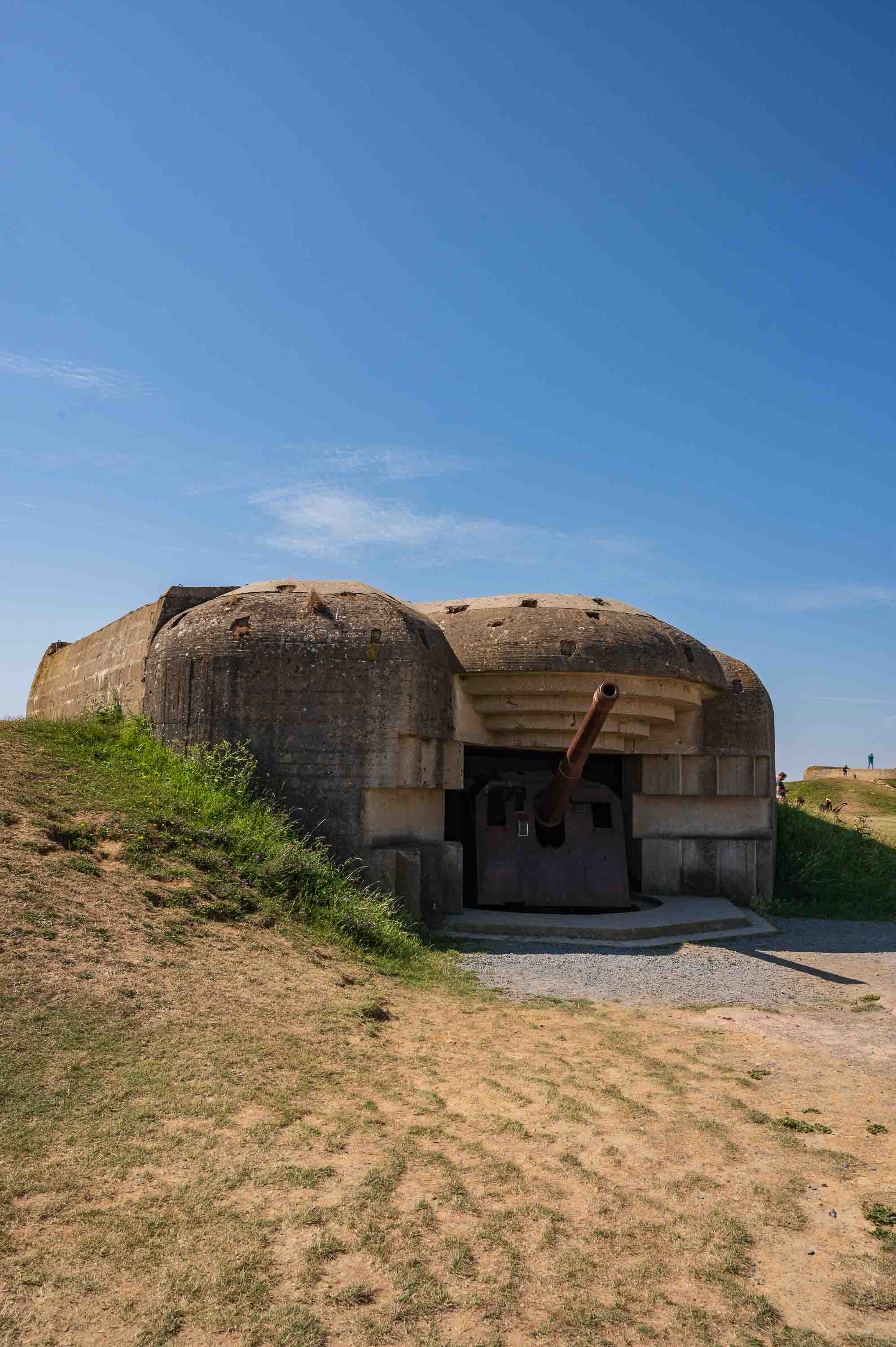
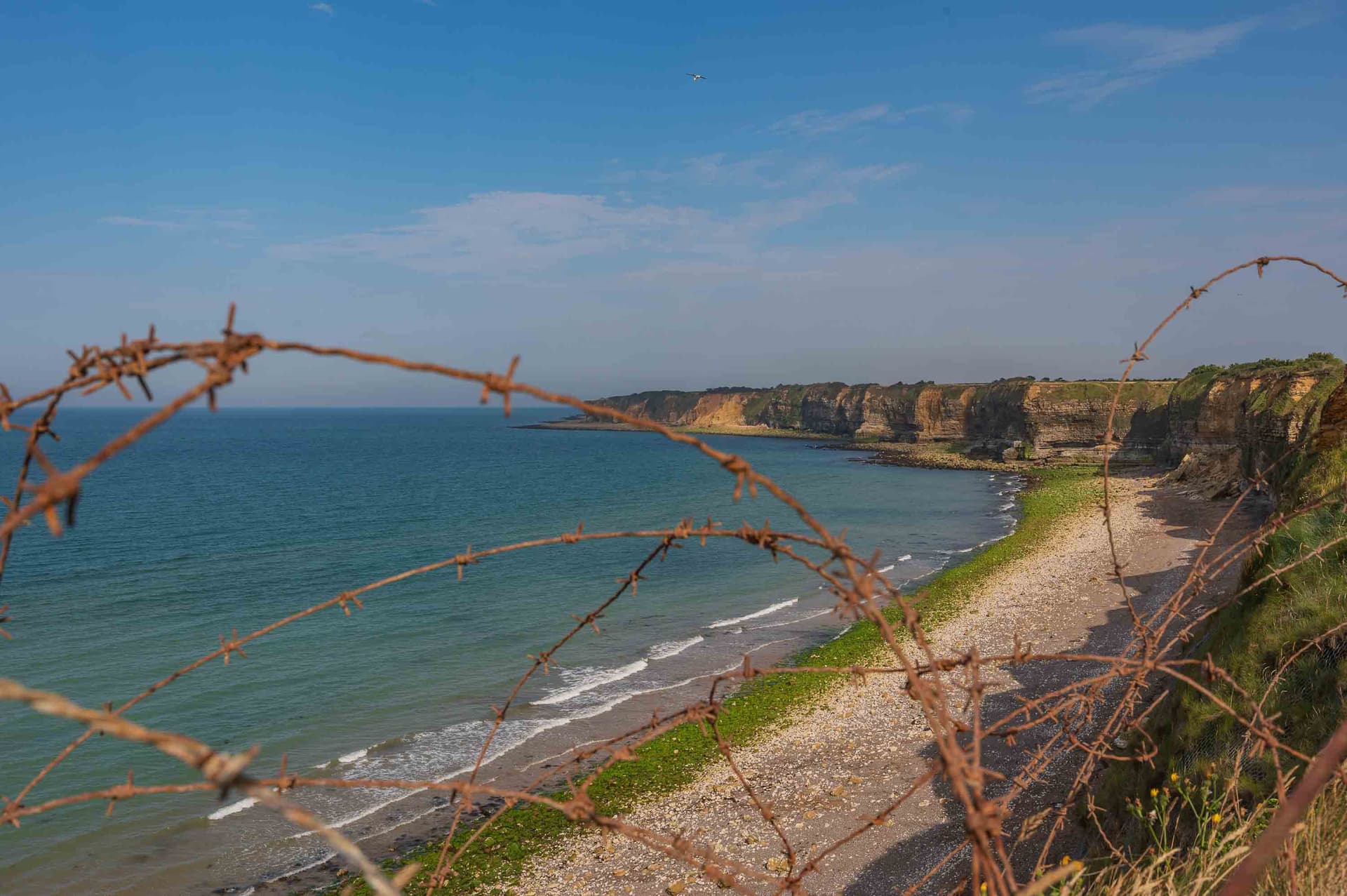
One of the bunkers of the German battery at Longues-sur-Mer, its cannon still aimed at the sea.
Rusted barbed wire now frames an empty, peaceful beach on the Normandy coast.

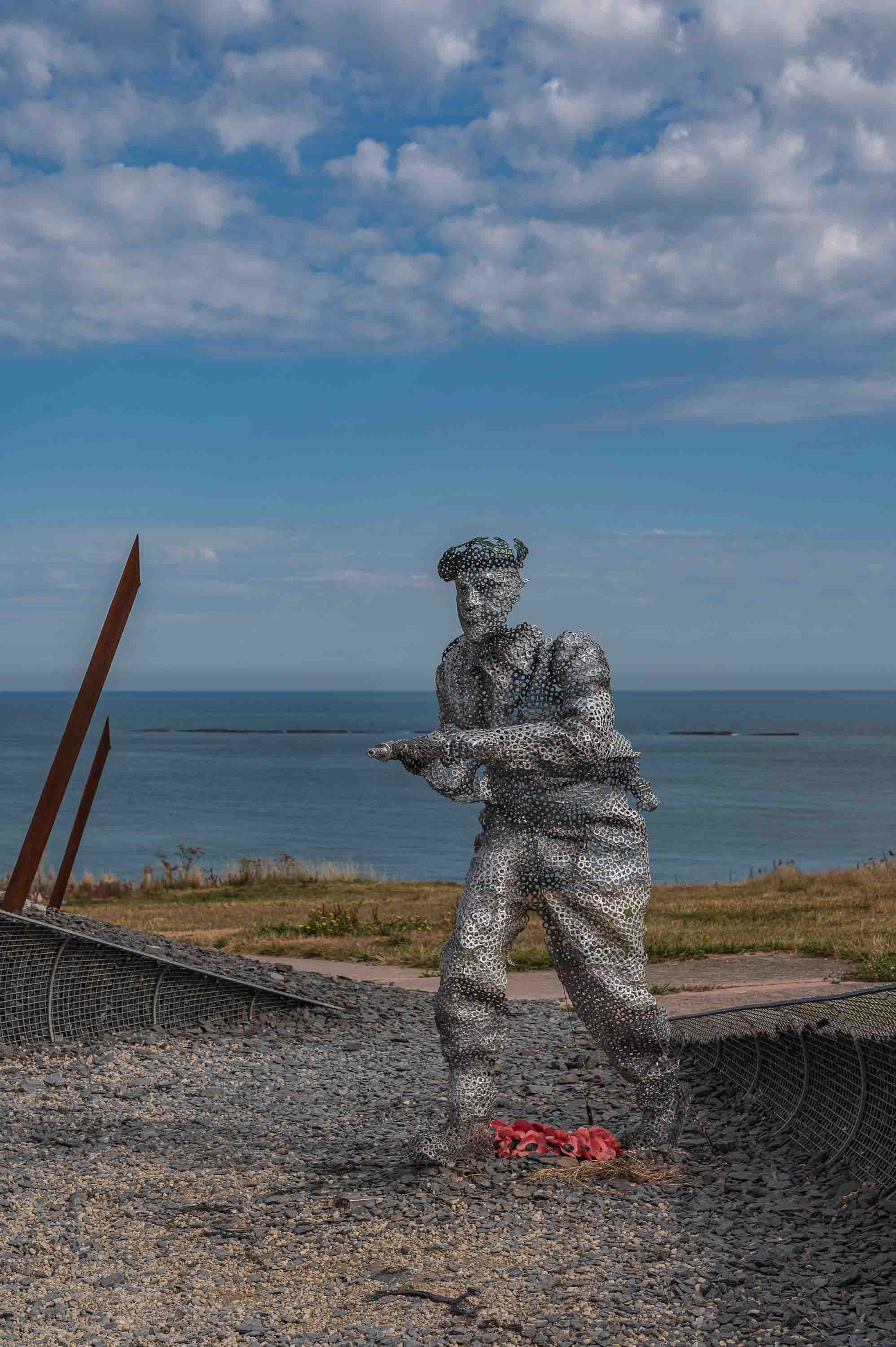
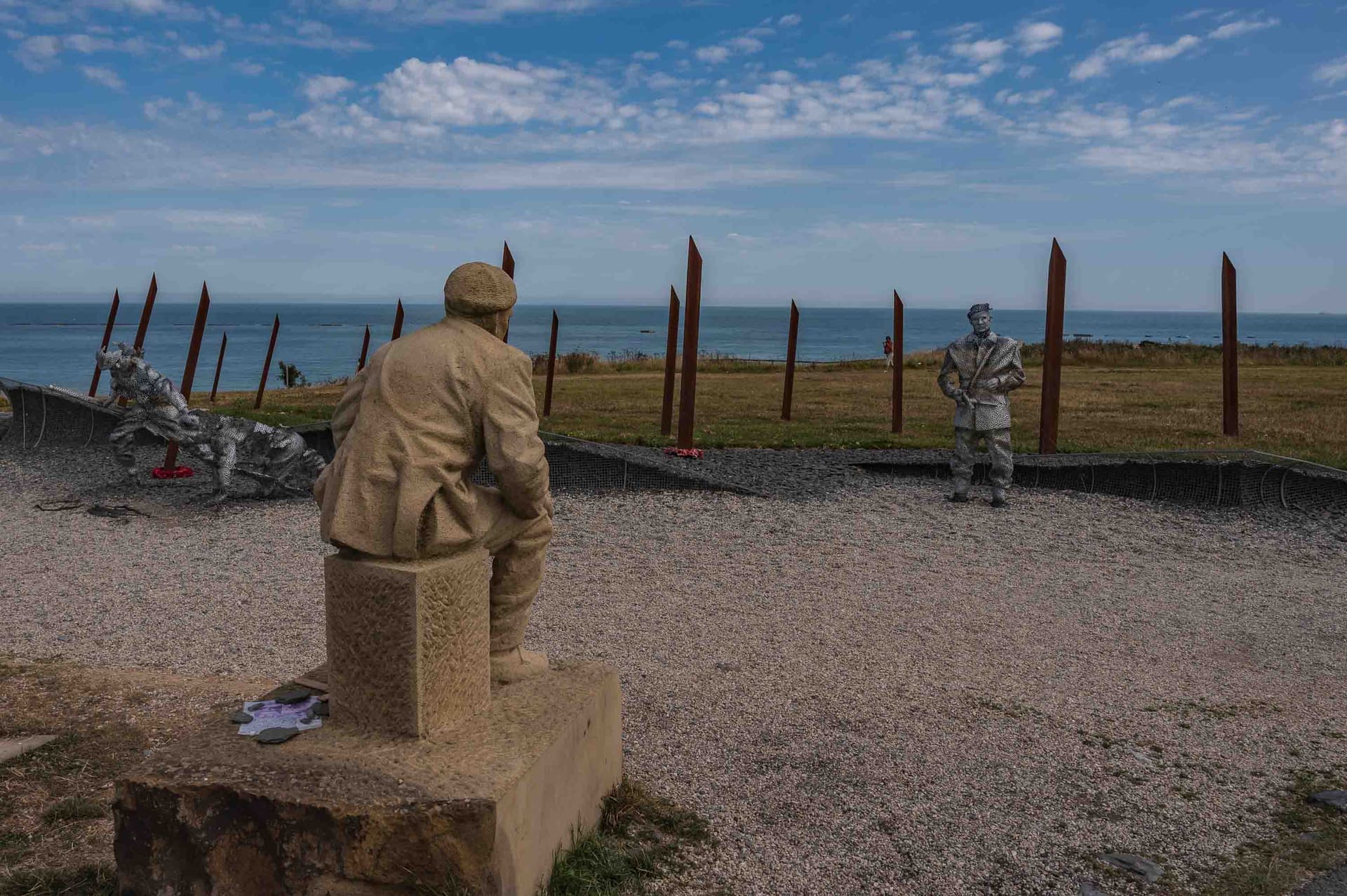
Of all the photos I'm sharing, the one that in my view best captures this is a sculpture commemorating the sacrifice of the Canadian soldiers who landed near Arromanches. There, they can be seen depicted as ghosts still running through the waves, dodging the obstacles set up on the beach.
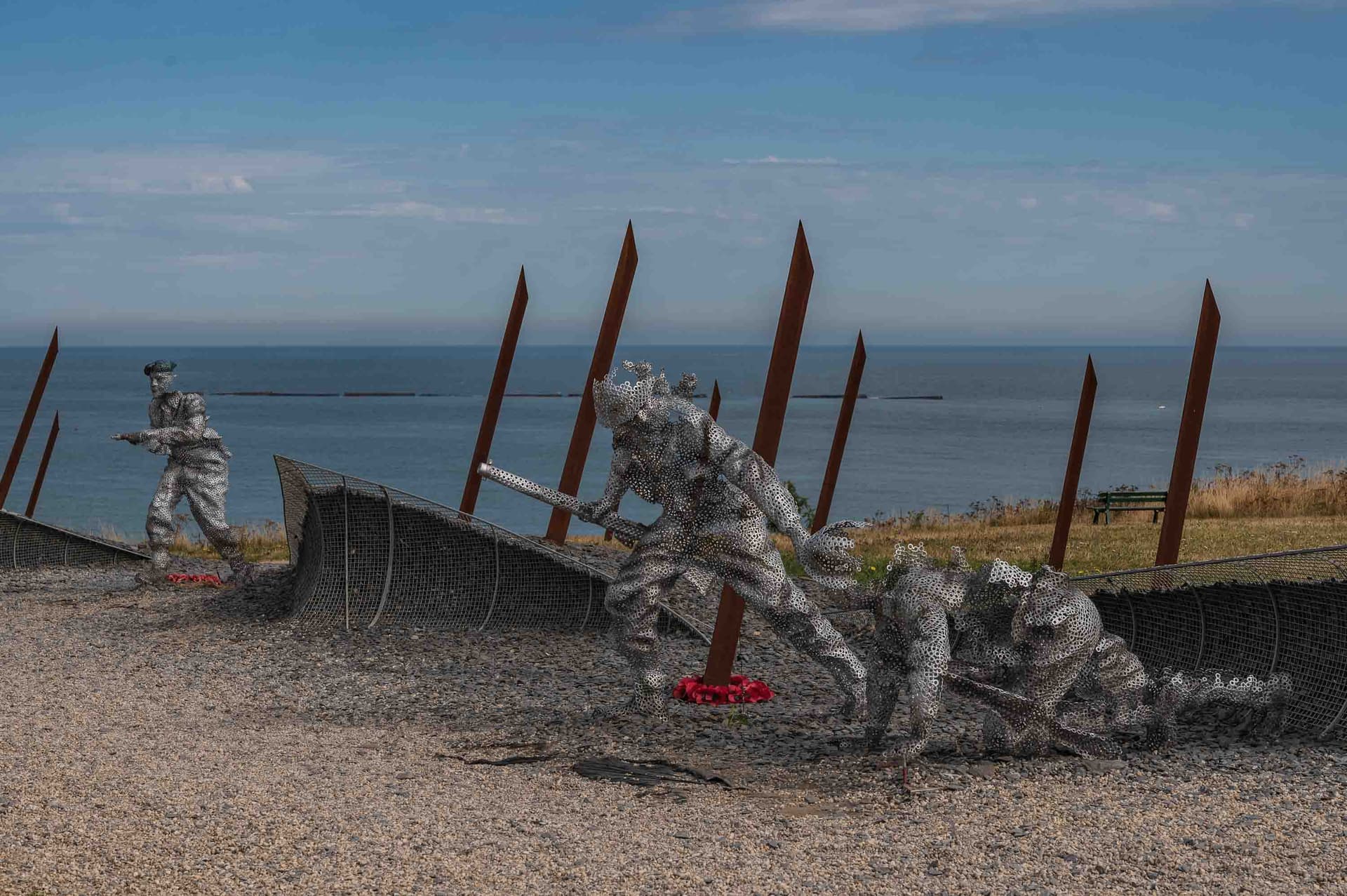
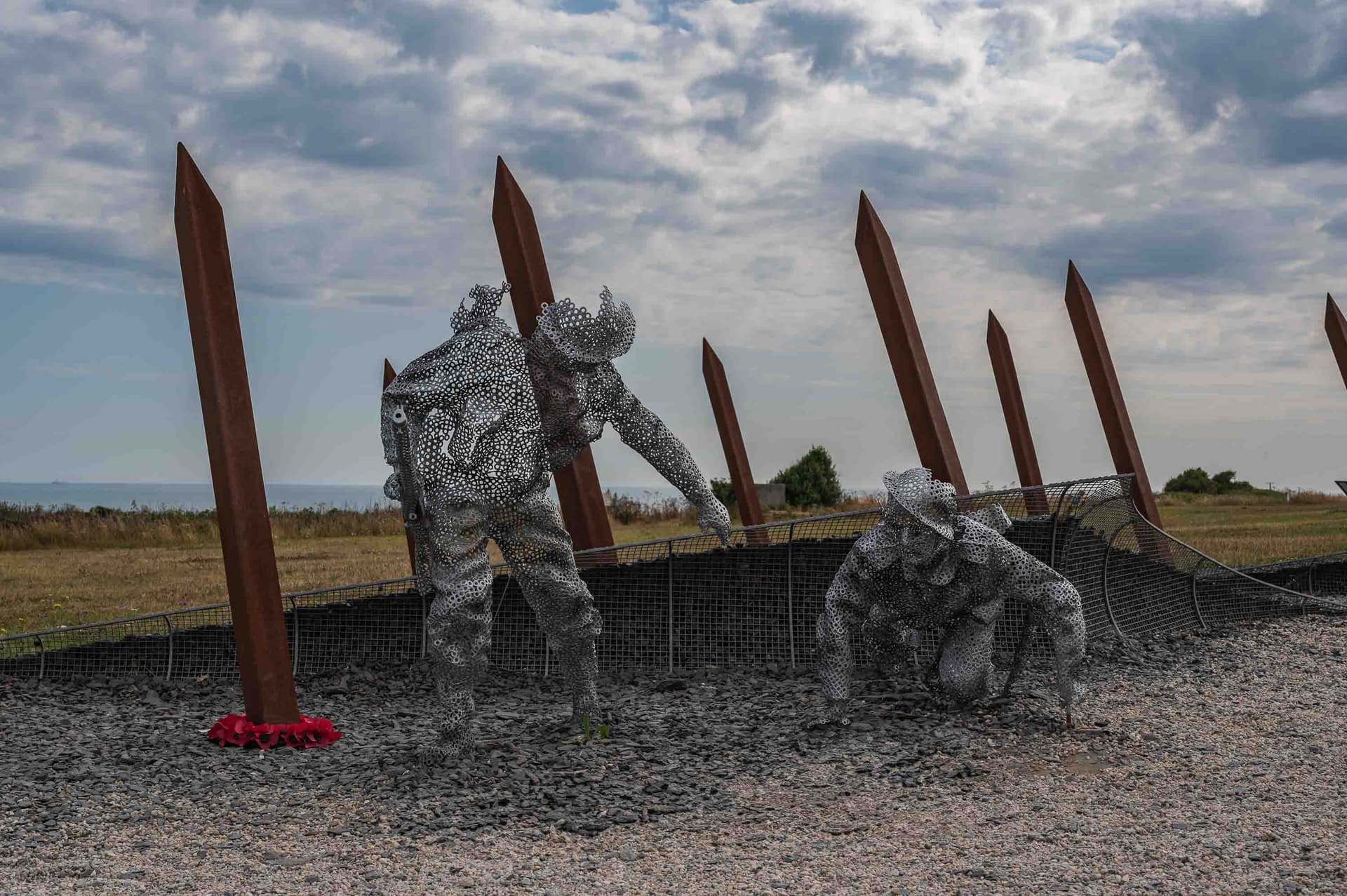
Ghostly figures, made of wire and steel, still run among the spikes set up on the beach.
Wreaths of red poppies laid beside the memorial's figures, in tribute to the fallen.

Countless Places to Remember D-Day

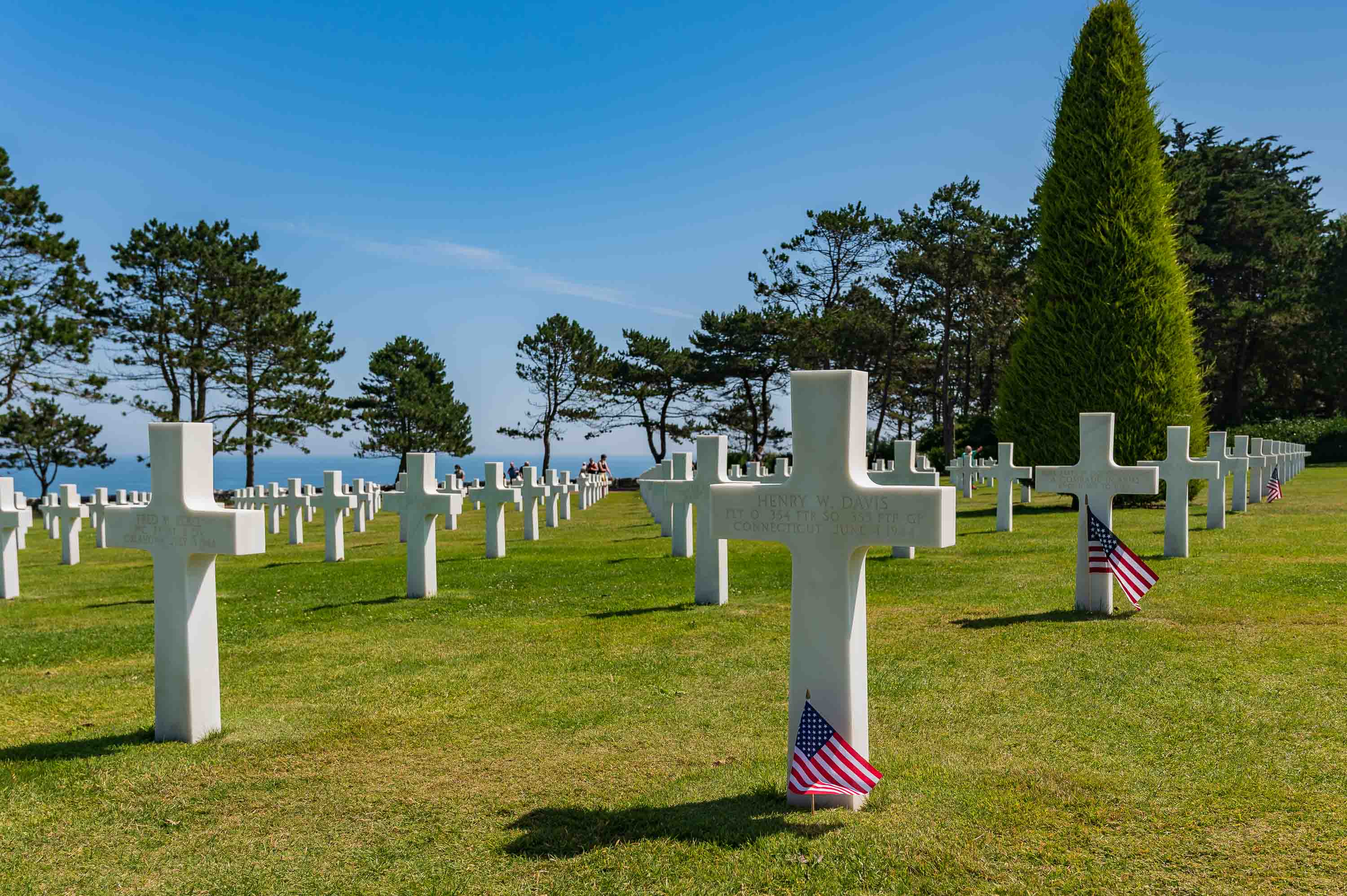
While there are many museums, I especially recommend visiting the Caen Memorial, where you can see some very interesting documentaries; the La Cambe German war cemetery, which holds the remains of 21,222 German soldiers who fell in the Battle of Normandy; and the American Cemetery at Colleville-sur-Mer, with its 9,389 white crosses. As a curious detail, buried there side by side are two sons of President Theodore Roosevelt, who fell in the two great world wars. They are First Lieutenant Quentin Roosevelt, shot down nearby, and Brigadier General Theodore Roosevelt Jr., the highest-ranking officer to land on D-Day, who was posthumously awarded the Congressional Medal of Honor for his actions that day on Utah Beach.
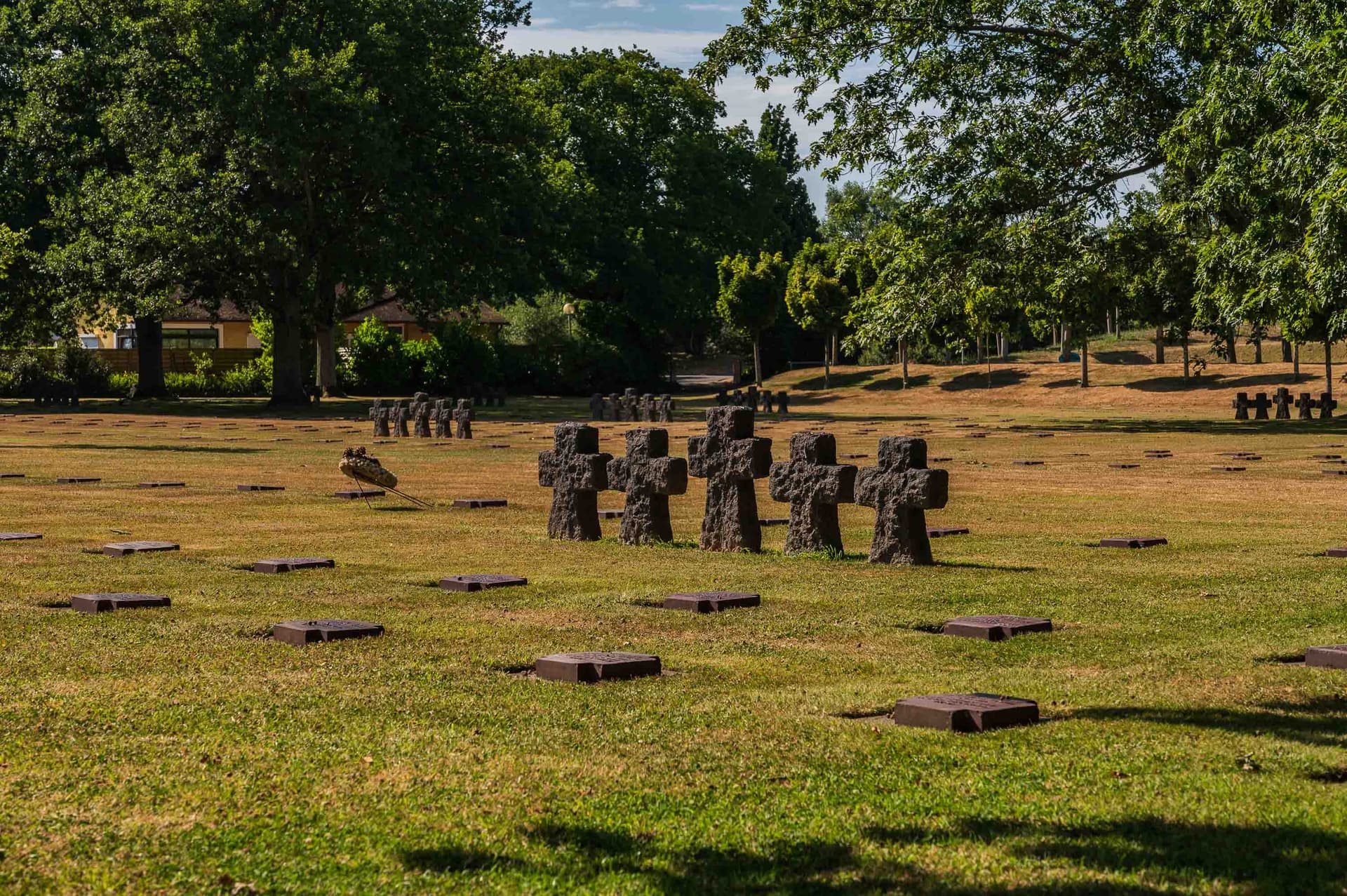
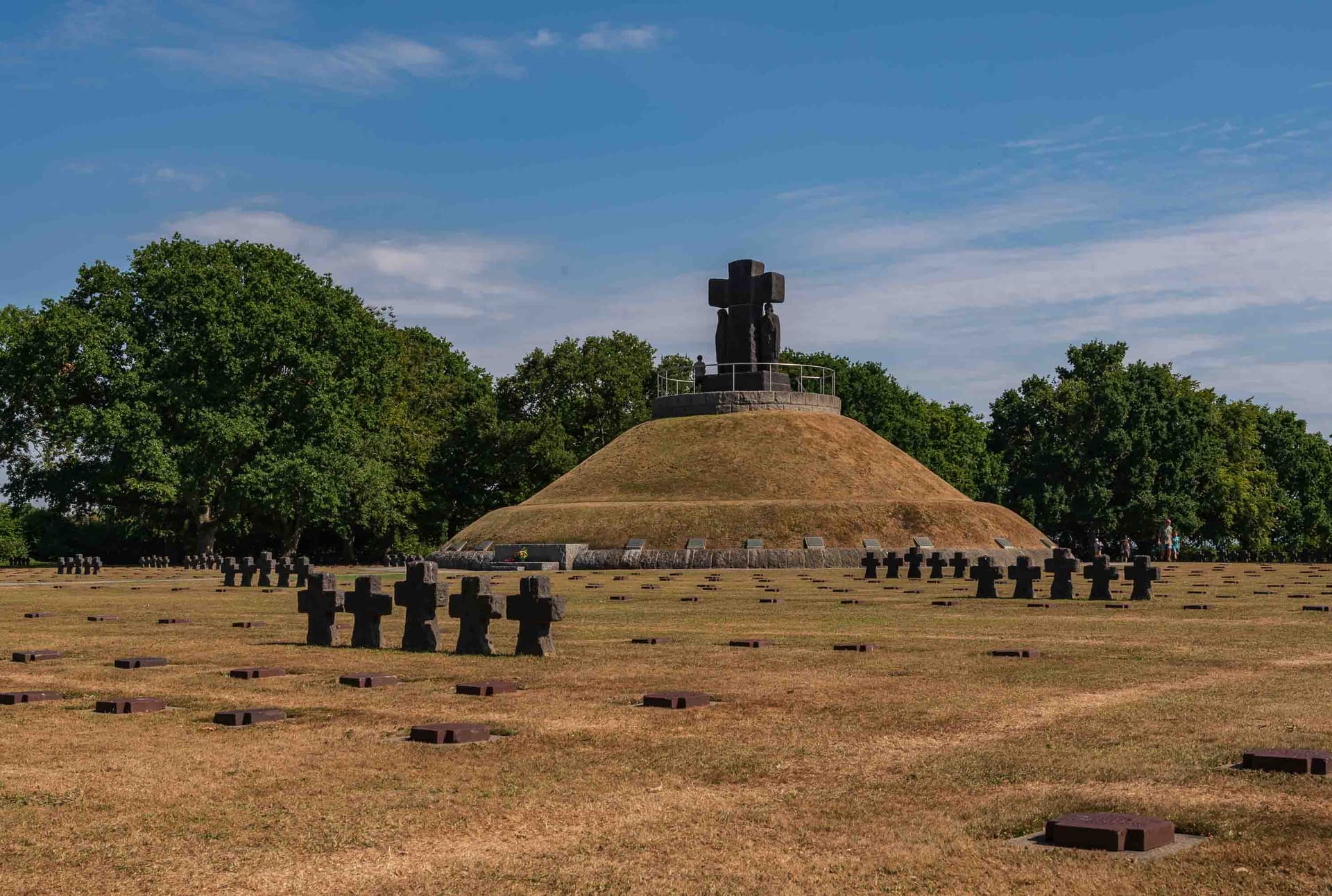
Volcanic stone crosses at the La Cambe German war cemetery.
The central mound at La Cambe, crowned by a large cross, surrounded by the graves of thousands of German soldiers.
White crosses and American flags at the American Cemetery in Colleville-sur-Mer, facing the sea.

If you'd like to keep discovering interesting places, I invite you to check out other entries on my blog.
Other Postcards from D-Day

A soldier, alone facing the sea: detail from the memorial to those who fell in the landing.
Another memorial sculpture silently looks out over the beach.
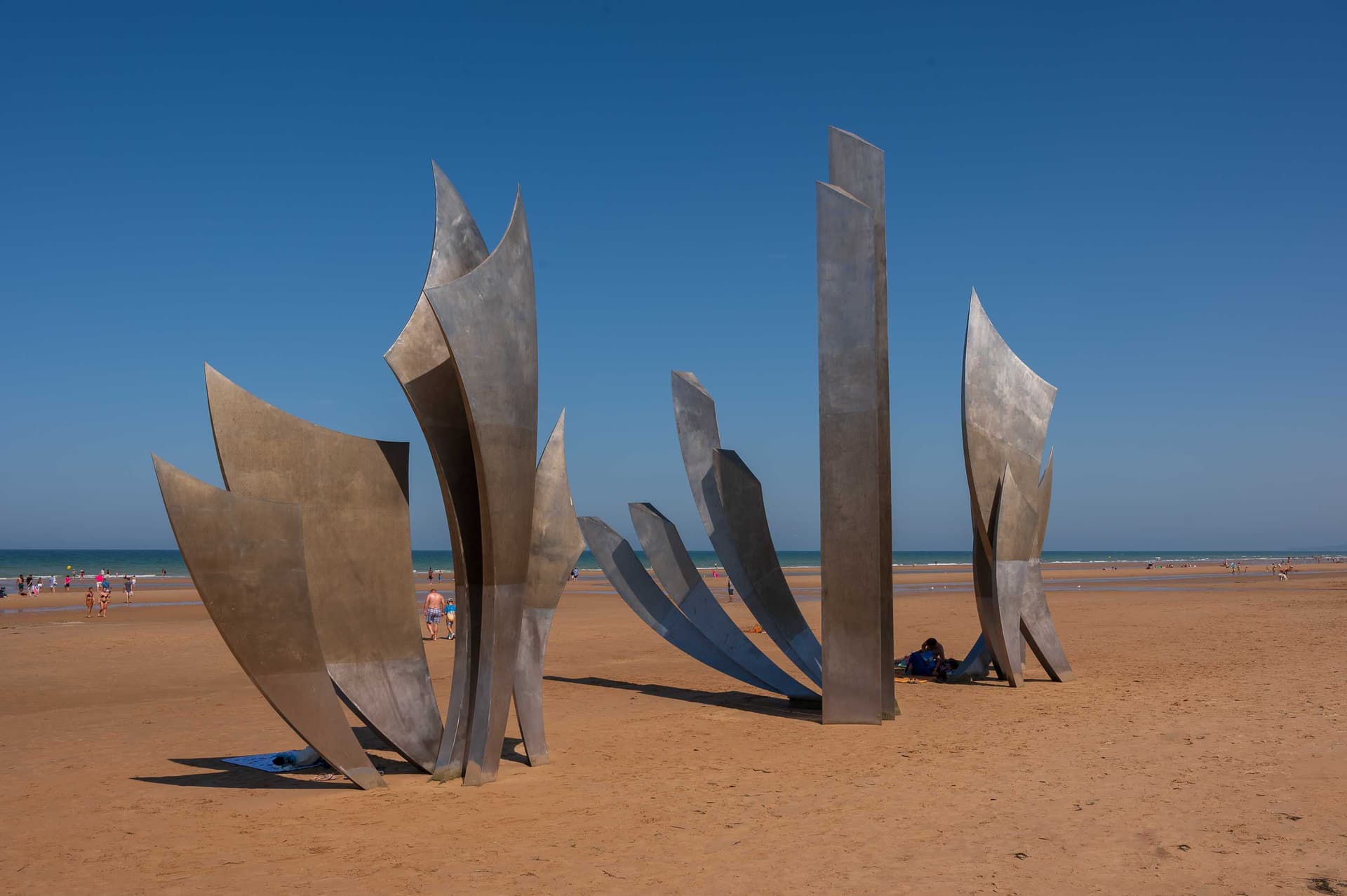
"Les Braves," the sculpture by Anilore Banon on Omaha Beach.
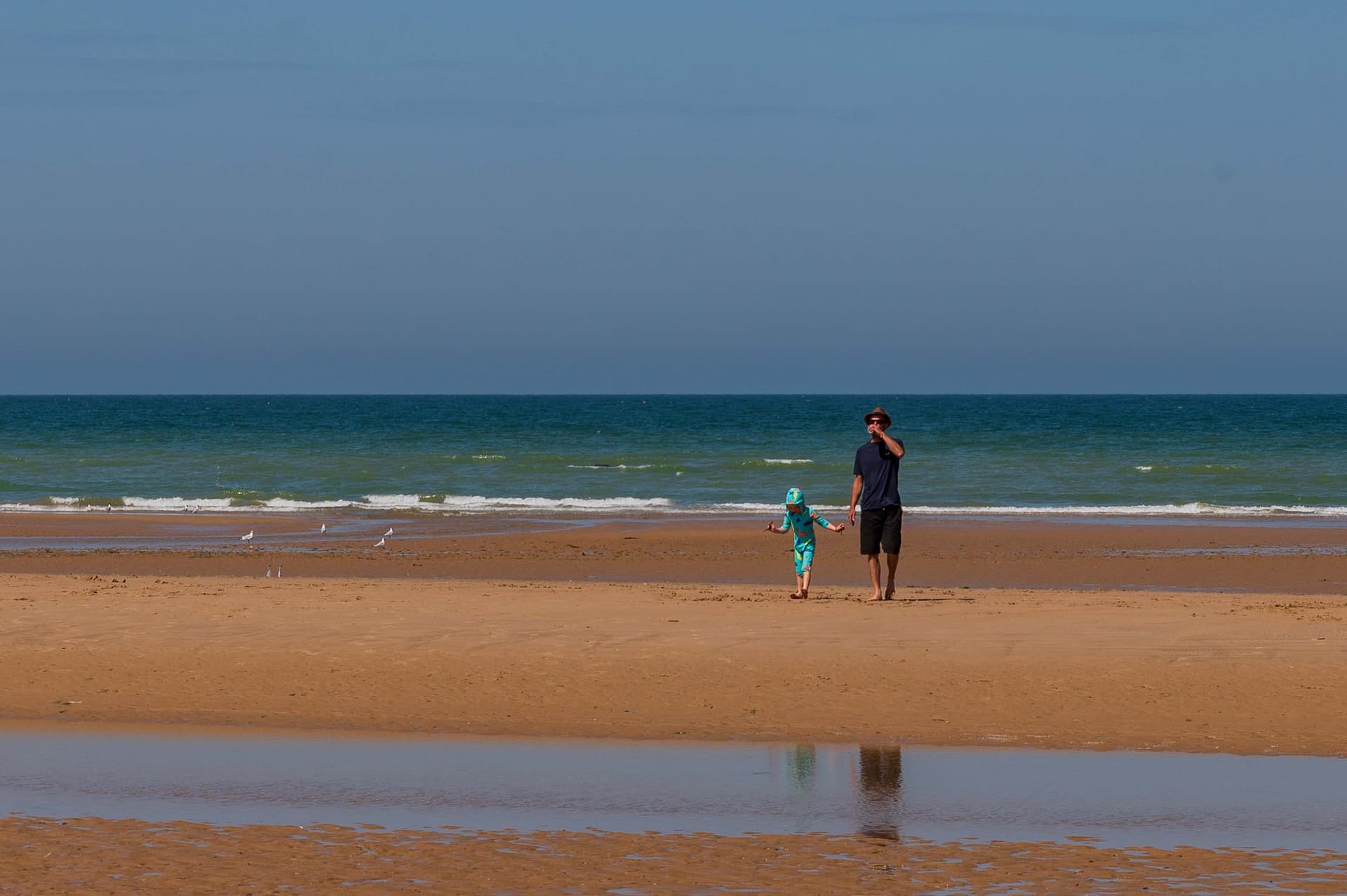
A father and daughter walk today along a beach that, 80 years ago, was a battlefield.
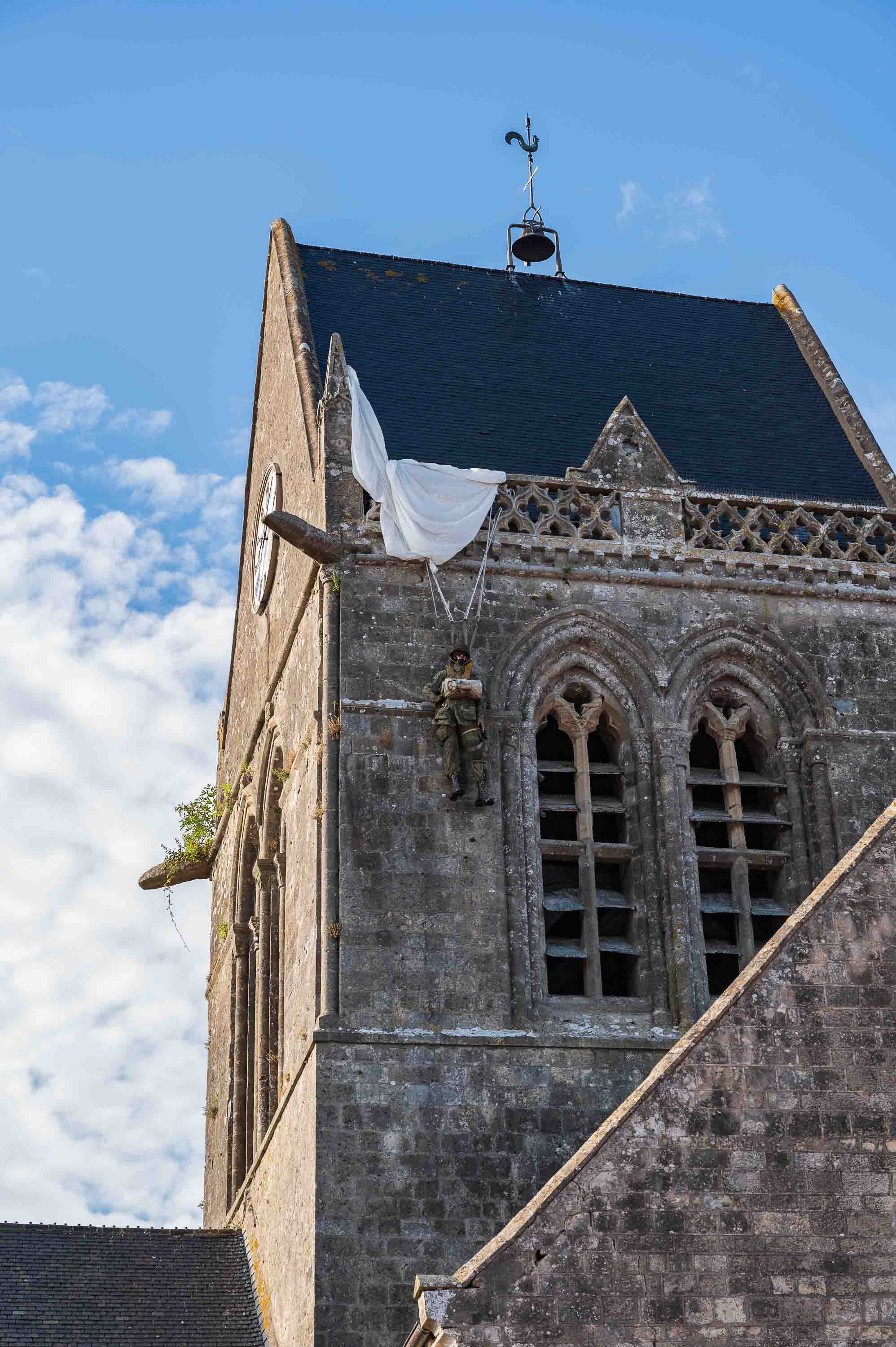
The dummy commemorating paratrooper John Steele, still hanging from the bell tower of the church at Sainte-Mère-Église.
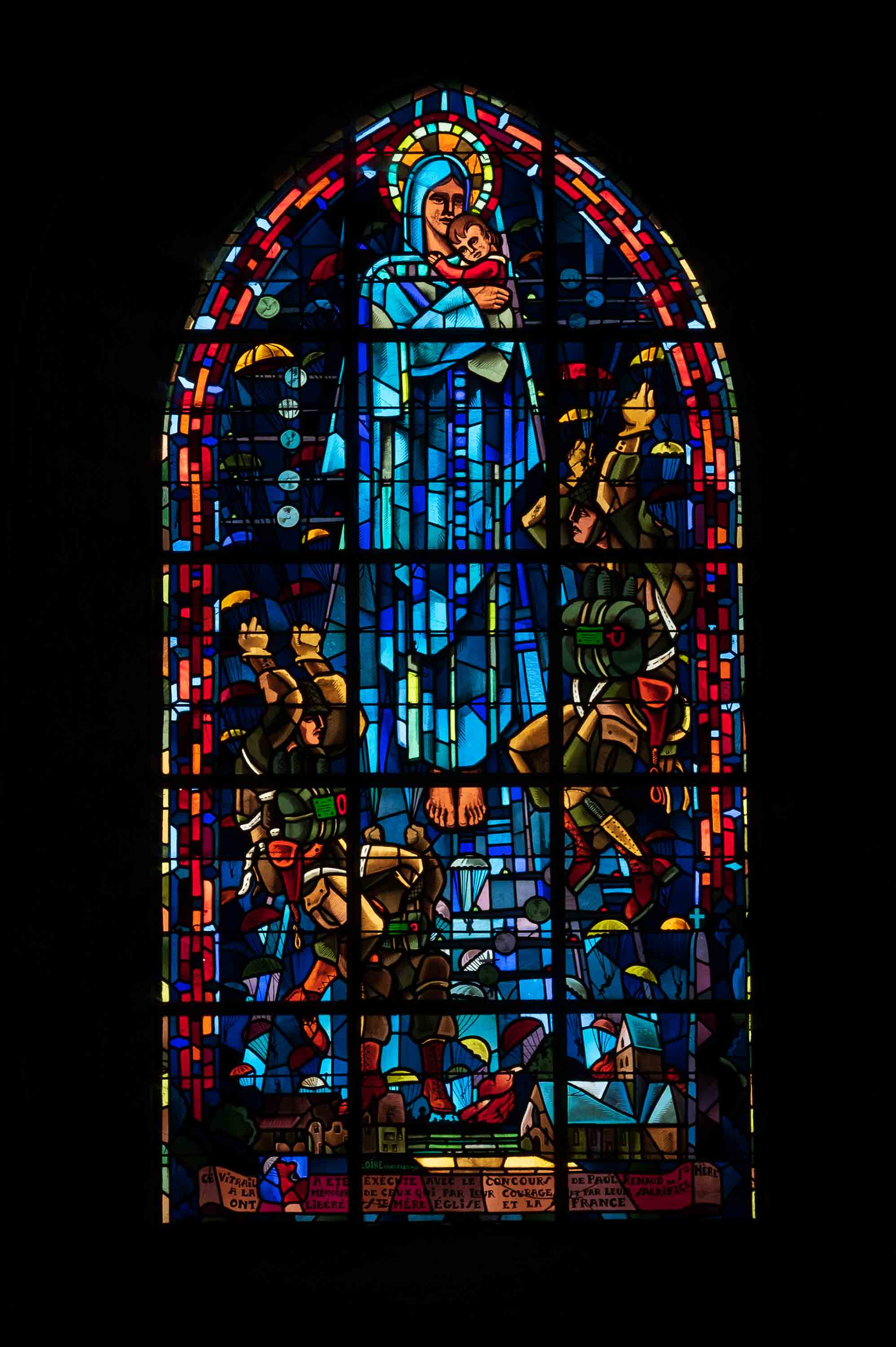
Stained glass in the church at Sainte-Mère-Église, with the Virgin surrounded by paratroopers.
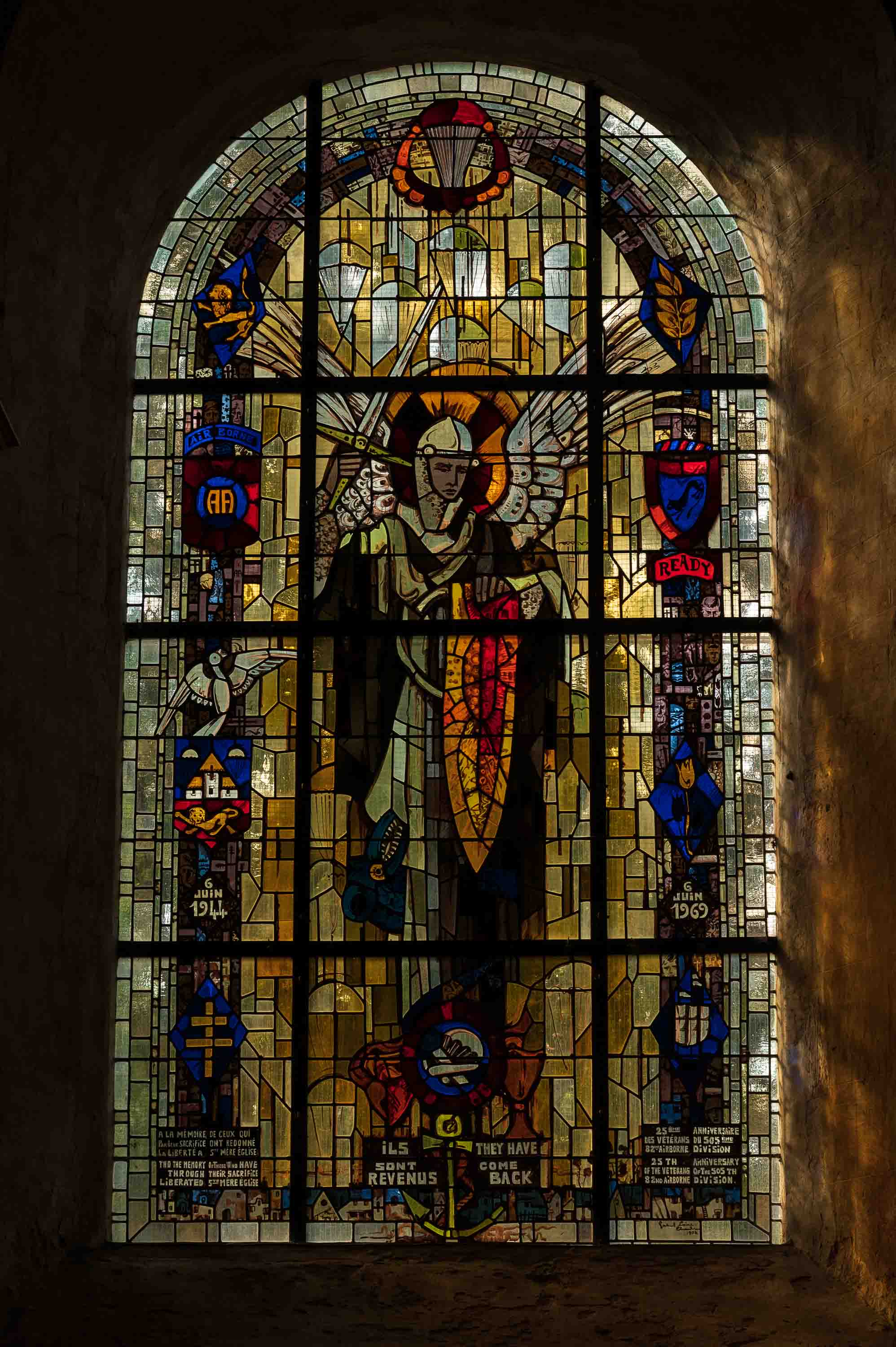
Another commemorative stained glass window in Sainte-Mère-Église: "Ils sont revenus" — "They have come back."
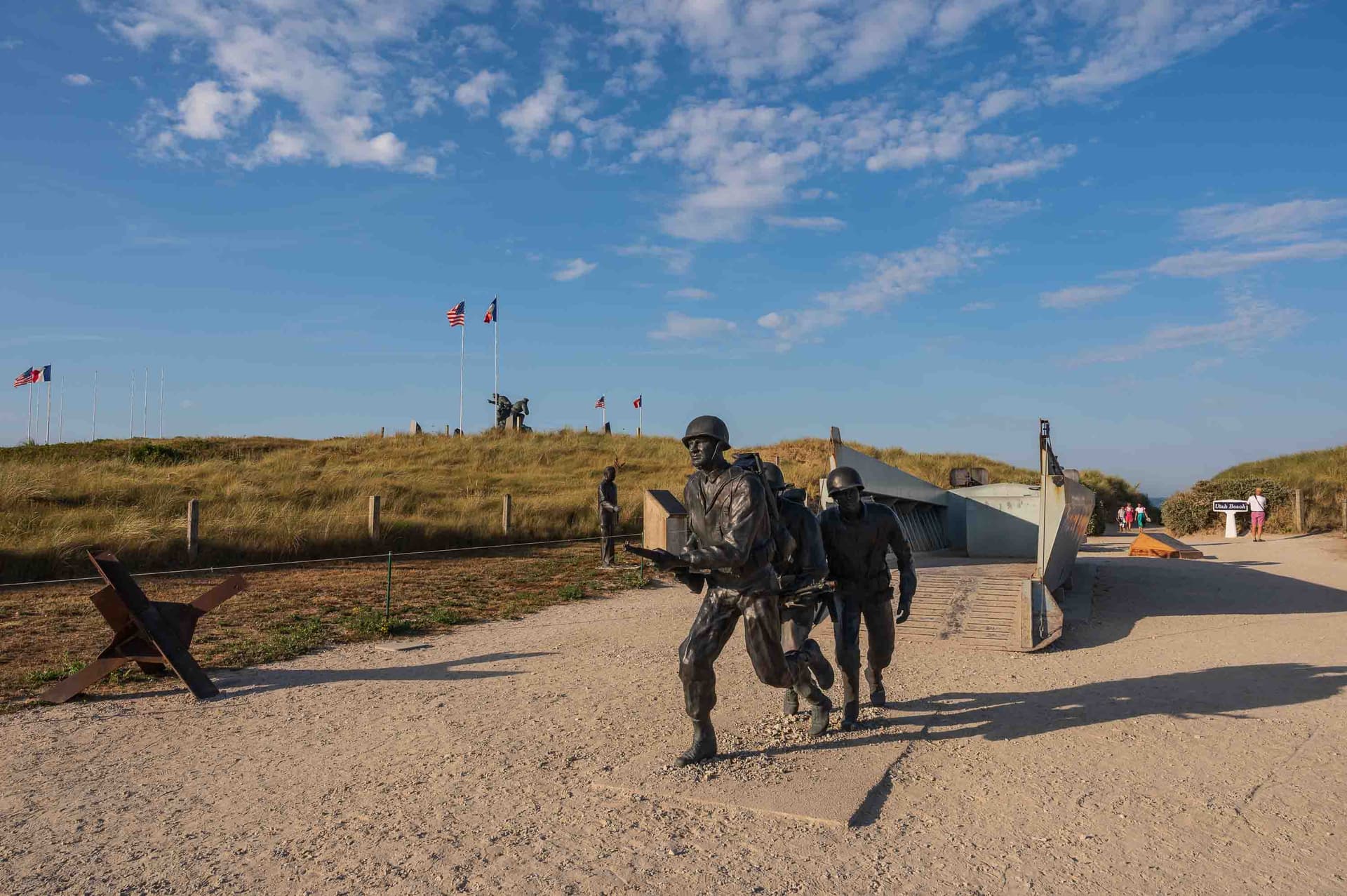
The monument to the American soldiers who landed at Utah Beach.